
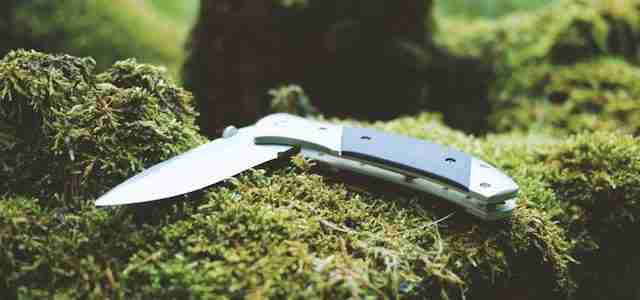
Ask any experienced hiker, camper, hunter, or backcountry traveller about the piece of gear they carry every single time, and a knife will almost always come up. It prepares food, processes firewood, handles cordage, manages first aid situations, and fills a dozen other practical roles that vary depending on the trip and the terrain.
What gets far less attention is what it takes to keep that knife in condition to do all of those things reliably. Most outdoor enthusiasts invest considerable time and money choosing the right blade. Far fewer give the same thought to maintaining it. That gap is where performance drops, safety risks creep in, and an otherwise excellent piece of kit stops earning its place in the pack. Here is why knife maintenance deserves a regular place in your outdoor routine and what that actually looks like in practice.
More People Are Getting Outside Than Ever Before
Outdoor participation in the United States is at a record high. According to the Outdoor Industry Association’s 2024 Participation Trends Report, outdoor recreation participation grew 4.1% to a record 175.8 million people representing 57.3% of all Americans aged six and older. Hiking, camping, and fishing each added over two million new participants.
That growth matters for gear manufacturers, trail managers, and park services. But it also means a large and growing number of people are heading into the outdoors with equipment they may not fully know how to look after. A knife is one of the most fundamental pieces of kit in any outdoor pack, and the condition of its edge directly determines how useful and how safe it is to carry.
Why a Dull Blade Is More Dangerous Than a Sharp One
This surprises a lot of people, but it is one of the most consistently repeated points among professional outdoor guides and knife instructors: a dull blade causes more injuries than a sharp one. The reason is straightforward. A sharp edge cuts cleanly with minimal applied force. A dull edge requires significantly more pressure to do the same work, which means less control over the blade and a much higher chance of the knife slipping at the worst possible moment. When you are cutting food, carving a stake, or processing kindling in the field, control is the difference between a clean cut and an injury.
Understanding how sharpening works mechanically is the starting point for keeping your blade in genuinely usable condition. A well-written how to sharpen a knife properly guide breaks down what is happening at the edge geometry level the bevel angle, the burr, and the progression through different abrasives in a way that makes the process far less intimidating and significantly more effective once you are out in the field.
The Three Pillars of Knife Maintenance
A well-maintained knife comes down to three consistent practices. None of them are technically complicated, but all three need to happen regularly rather than as a reactive fix when the blade stops performing.
- Sharpening: Restoring the edge geometry when the blade has gone dull. This is the most involved part of maintenance and the one most people either skip or do incorrectly. Done right, it returns the blade to peak performance. Done wrong, it removes more steel than necessary and gradually shortens the life of the knife.
- Honing: Realigning the edge between full sharpening sessions. Honing does not remove material, it corrects the micro-level folding of the edge that occurs through regular use. Regular honing dramatically extends the time between sharpenings and keeps the blade performing consistently.
- Cleaning and lubrication: Removing moisture, food residue, and organic material from the blade after each use, and applying a light oil to the pivot and locking mechanism if the knife has a folding design. This prevents corrosion, keeps mechanisms operating smoothly, and protects the handle material from degradation.
What Good Maintenance Actually Involves in the Field
The full maintenance kit does not need to come with you on every trip, but a few items belong in any pack where a working knife is essential gear.
A compact folding sharpener or a ceramic rod covers the most common field maintenance needs. They handle honing and light sharpening without adding meaningful weight. For longer trips where the blade will see heavy use, a small whetstone gives you much greater control over the sharpening process and produces a more refined edge.
Columbia River Knife & Tool® (CRKT®) produces resources specifically designed to help knife owners understand the sharpening process at a mechanical level not just the technique, but why the technique works the way it does. That understanding changes how you approach your blade in the field, because you can read what the edge needs rather than just going through motions.
After each use, wipe the blade clean before it goes back into the sheath or your pack. Moisture and organic residue are the two primary causes of corrosion, even on stainless steel blades. A few seconds of basic cleaning extends the life of the knife considerably.
How Blade Material Affects Your Maintenance Routine
Not all knife steels behave the same way, and understanding your specific blade material shapes how you should be looking after it.
Stainless steel blades are more resistant to corrosion and generally more forgiving in wet environments. They typically require a bit more effort to sharpen, but they also hold up better to neglect. High-carbon steel blades take an extremely sharp edge and are easier to sharpen, but they are more reactive — they rust and discolour faster when exposed to moisture and acidic foods. They reward consistent, attentive maintenance.
Knowing what your blade is made of and what that steel’s characteristics are in practice is one of the most underrated pieces of knife knowledge for outdoor use. The wrong maintenance approach for your steel type either wastes effort or actively damages the edge over time.
The Long Game: Maintenance as Respect for Your Gear
There is a broader principle here that experienced outdoor people tend to internalise early: the condition of your gear reflects your relationship with it. A well-maintained knife does not just perform better – it lasts longer, works more reliably when conditions get difficult, and builds the kind of confidence that only comes from knowing your tools are genuinely ready.
The opposite is also true. A neglected blade that gets sharpened reactively, only when it visibly fails to cut, cycles through metal faster, develops uneven bevels that become harder to correct, and eventually reaches a point where no amount of sharpening fully restores it. That is an avoidable outcome for a tool that, with basic regular care, can perform well for years.
Building a five-minute post-trip routine around cleaning and inspection takes almost no time and extends the functional life of your knife dramatically.
Conclusion
Most people who sharpen their own knives do it with imprecise technique they picked up somewhere without really understanding why it works or whether they are doing it correctly. The result is a blade that feels marginally better after sharpening but never quite reaches the edge it is capable of.
If you have been sharpening by feel and your results are inconsistent, the most useful thing you can do is go back to the fundamentals. A solid, detailed how to sharpen a knife properly guide that explains the mechanics not just the steps will reframe what you are trying to achieve and make every sharpening session more deliberate and more effective.