
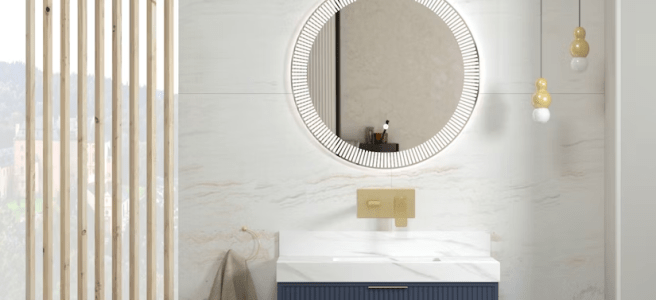
Small bathrooms can be a challenge when it comes to storage. The choice of the right fixtures is key for better space utilization. While there are various types of small bathroom storage solutions available, a vanity unit is often at the top of the list as it combines storage, counter space, and style. However, you will need to consider various factors to decide the type of small vanity unit that can be the right fit for your bathroom.
In this blog, we discuss everything that you should know about choosing the vanity unit for your small bathroom.
Assessing Your Bathroom Space
You can not step out and buy a bathroom vanity unit unless you know what size would fit in your bathroom. So, assess the available space to determine the right size for your bathroom furniture unit. Here is how you can measure the space accurately.
Tip 1: Taking Accurate Measurements
Remember, ‘measure twice, cut once’ is not just a rule for carpenters or plumbers. Try to follow the same principle when taking the measurement as a DIY.
Here is a step-by-step process for measuring the space for a bathroom vanity unit.
Step 1. Remove items from the designated space for accurate measurement.
Step 2. Use a tape measure to find the width of the space at its widest point.
Step 3. Measure the depth from the back wall to the front edge.
Step4. Account for door and drawer clearance to avoid obstructions.
Step 5. Measure and consider the locations of existing plumbing fixtures.
Step 6. Determine the height from the floor to any obstacles.
Step 7. Measure the height and distance of electrical outlets.
Tip 2: Determine The Size
Once dimensions are in hand, you can decide what size and type of vanity units you should be looking for. Like other bathroom fixtures, bathroom furniture comes in various sizes and types. You will need to match your dimensions with the vanity units available on the bathroom retailer’s website or shop.
| Vanity Unit Size (Width) | Bathroom Type |
|---|---|
| 400mm | Cloakroom, Small |
| 500mm | Cloakroom, Small |
| 600mm | Small |
| 700mm | Small |
| 800mm | Small |
| 900mm | Small |
Tip 3: Decide on the Type
Like any other fixture, there are various types of vanity units and cabinets available in the bathroom. But not all are suitable for the small bathroom. For example, for a small bathroom, a combination vanity ( vanity unit fitted with a sink and back to wall toilet) may offer better space optimization. Additionally, you may want to decide between floor standing or wall-hung vanity units. While floor standing vanities are often a top choice in medium to large bathrooms, there are slimline designs that may fit perfectly even in cloakrooms and small bathrooms. Wall-hung vanity units, on the other hand, don’t occupy floor space and are therefore preferred for their space-saving design.
| Feature | Wall-Hung Vanity Units | Floor-Standing Vanity Units |
|---|---|---|
| Space Usage | Maximizes floor space; creates a sleek, modern look | Takes up a little more floor space; traditional design |
| Installation | Mounted on the wall; requires sturdy wall support | Rests on the floor; easier to install |
| Cleaning Ease | Easy to clean underneath; no obstruction from the floor | Cleaning around the unit may be more challenging |
| Style | Contemporary and modern aesthetics | Traditional and classic feel |
| Storage Options | Typically offers little less storage space | Generally, provides more storage options |
| Flexibility | Adjustable height for a customized look | Fixed height; less flexibility in placement |
| Accessibility | Can be installed at a convenient height for users | Standard height may not be suitable for all users |
| Bathroom Size | Ideal for smaller bathrooms; creates an illusion of space | Suitable for all types of bathrooms |
| Cleaning Frequency | Requires more frequent cleaning underneath | May accumulate dust and dirt around the base |
| Cost | Often more expensive due to modern design | Generally, more affordable |
| Best Fit Recommendations | Small bathrooms, modern aesthetics, adjustable mounting heights | Medium to Larger bathrooms, classic design, affordable option. Compact units are also available. |
Determining Your Storage Needs
You will need to consider your storage needs before deciding about the type of vanity unit. Assess your requirements for storage based on the items you wish to keep in the bathroom. These may include toiletries, towels, cleaning supplies, etc. Think about whether your storage needs are going to increase in the near future. Your understanding of your needs will guide you toward the most suitable bathroom furniture option.
Tip 4: Prioritise Storage Features
Decide whether you want a storage room with cabinets or drawers. Both are great for various reasons. Where drawers are great for organizing smaller items, cabinets are better at accommodating larger ones.
Tip 5: Consider Utilising Vertical Space
In a small bathroom, vertical space is often underutilised. Therefore, looking for a vanity unit that makes the most of the vertical space can be a good idea. One such type of vanity unit is tallboy cabinets that can also be a great option for small bathrooms.
Vanity Unit Material and Finish.
While functionality is important, vanity units can significantly enhance the overall appearance of a bathroom provided you choose the right material and finish. Material is also crucial to ensure your vanity unit can withstand the harsh humid environment.
Tip 6: Prioritise Water-Resistant Materials
Bathrooms are regularly exposed to moisture, so choosing water-resistant materials that can withstand humidity without warping or deteriorating is essential. Materials like solid wood, engineered wood MFC, or moisture-resistant MDF are popular choices for vanity units.
Tip 7: Select a Complementary Finish
It is important that your vanity unit finishes coordinating with the overall design of your bathroom. Whether you prefer a classic wood finish, a sleek and modern gloss, or a timeless matte look, ensure that the chosen finish complements the colour scheme and style of your bathroom.
Assessing Sink Options
Most vanity units come with a sink, and in a small bathroom, it becomes even more important. Choose the right sink type to enhance the overall functionality and look of the vanity unit. There are various sink styles to consider, each with its own set of advantages and drawbacks.
Finding the Right Faucet
Although small taps can have a significant impact on the overall aesthetics of the vanity unit, Therefore, it is important to make the right choice. You should consider style, vanity type, and cost when choosing the sink tap to ensure a cohesive look and a visually appealing bathroom.
Tip 8: Coordinate Faucet Finishes
The coordinated or unified look is crucial for all types of bathrooms. To achieve this, you will need to coordinate the finish of your taps with a vanity unit and overall bathroom aesthetics.
Tip 9: Opt for Space-Saving Faucet Designs
For a small bathroom, every inch matters. While the size of the tap may depend on the size of the vanity, you should prefer a minimalist faucet in a small bathroom. Such designs can be wall-mounted taps, single-handle designs, or the ones that are specifically designed for small bathrooms.
Factoring in Lighting
Lighting can help make your small bathroom look and feel bigger. It can also enhance the overall look of the vanity unit if placed strategically around it. So, when choosing the vanity unit for a small bathroom, you must think about how it will interact with the lighting.
Tip 10: Ensure Adequate Lighting
A small bathroom will need to be well-lit to be functional as well as visually appealing. In case you are planning to place the vanity near a mirror, ensure that it is well-lit and provides sufficient illumination for grooming and other tasks.
Setting a Budget
Setting a reasonable budget in advance can help choosing the right small bathroom vanity unit. It will allow you to skim through various options available in a variety of price ranges. So, decide what you can spend first to avoid over spending, save time, and narrow down your choices.
Tip 11: Factor in Installation Costs
Installation is a major part of the overall vanity unit costs. You may save it with DIY installation, but we don’t recommend it unless you are proficient at it. Wall hung vanity units are complicated to install and cost more for installation. Preferring a professional fitter over DIY will ensure seamless, in-time, and secure installation.
Tip 12: Explore Cost-Effective Alternatives
Bathroom fixtures are available in various price ranges. Therefore, you should explore alternatives if you are on a tight budget. You can particularly look for bathroom sale deals discounts. If your budget is too low, then consider refurbished options to achieve the desired look.
Seeking Inspiration from Design Trends
Staying informed about the latest bathroom design trends is important. Timeless small vanity unit styles are always a safe choice. On the other hand, choosing a vanity unit with a contemporary design can give your bathroom a fresh and updated appearance.
Tip 13: Explore Space-Saving Designs
Bathroom designs are trending towards minimalism. That makes it easier to find stylish vanity units specifically designed for smaller bathrooms. You should look for features like compact drawers, clever shelving, and innovative storage solutions.
Tip 14: Embrace Minimalism
Minimalist design is a popular bathroom design trend for 2026 that aligns well with small bathrooms. Therefore, we recommend opting for clean lines, simple shapes, and a neutral colour palette to create a visually uncluttered and serene space.
Final Thoughts
Choosing the perfect vanity unit for a small bathroom requires careful consideration of various factors such as available space in the bathroom (you should measure the space for the perfect fit) , storage needs, material selection and design trend. By following these tips and taking the time to assess your specific small space requirements, you can find a vanity unit that not only maximizes the functionality of your bathroom but also enhances its aesthetic appeal.