
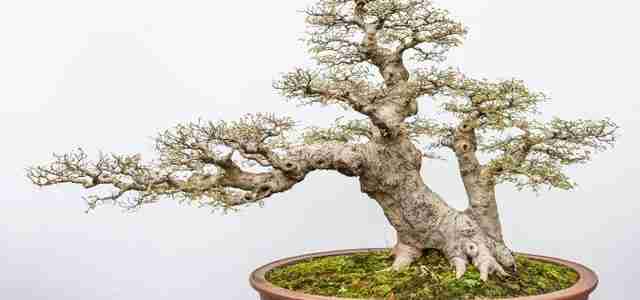
You can style artificial bonsai (this is commonly referred to as บอนไซปลอม in Thai) alongside framed artwork to create a cohesive display where the greenery and pictures complement each other. Choose artwork that complements the bonsai’s foliage, arrange frames around its distinctive silhouette and experiment with different heights to create visual balance. Whether you prefer colourful paintings, black-and-white photography or abstract prints, this combination introduces an interesting contrast between flat wall decorations and three-dimensional greenery. The result can make an ordinary corner feel more personal, artistic and thoughtfully arranged.
Let the Artwork and Bonsai Have a Conversation
Imagine a framed landscape hanging above a wooden console table. Beneath it sits a bonsai with gently curved branches.
Although the objects are different, their shapes and colours can create a visual connection.
This is what makes the pairing interesting.
Instead of selecting artwork and greenery separately, look for details that help them complement each other.
A painting featuring flowing lines might echo the bonsai’s branches, while a geometric print can create an appealing contrast with its irregular silhouette.
Neither piece needs to match perfectly. Sometimes, their differences make the arrangement more memorable.
Play With Height Instead of Perfect Symmetry
One decorating mistake is positioning a decorative tree directly below the middle of a picture just to achieve a symmetrical look.
While this can work, slightly uneven arrangements often feel more relaxed.
Try positioning the bonsai towards one end of a console table, with a framed print hanging slightly off-centre above it.
The tree’s branches can visually connect the lower furniture arrangement with the artwork.
For a gallery wall, use smaller frames around the space occupied by the bonsai rather than allowing its foliage to obscure important images.
Leave enough breathing room between the highest branches and the frames.
Use Colour to Bring Everything Together
Colour provides another opportunity to connect your decorative elements.
You do not need artwork featuring trees or gardens. Instead, consider how the tones interact.
For example:
- Neutral artwork: Pair beige, cream or charcoal prints with greenery for a restrained appearance.
- Colourful paintings: Choose artwork containing subtle green accents that complement the foliage.
- Black-and-white photography: Introduce bonsai as a gentle touch of colour.
- Earth-toned illustrations: Combine warm browns and muted oranges with a natural-looking planter.
The picture frame matters too. Wooden frames can create warmth, while slim black frames suit contemporary interiors.
Turn a Forgotten Wall Into a Small Gallery
You do not need an entire gallery wall to make this idea work.
A single framed print above a sideboard can look distinctive when paired with a sculptural bonsai.
Alternatively, arrange two or three smaller pictures at varying heights, allowing the greenery to anchor the composition below.
Consider the viewing angle from nearby seating. Artwork should remain visible, and the bonsai should not interfere with lamps, drawers or frequently used surfaces.
The arrangement should look attractive while remaining practical.
Create a Display That Feels Like Yours
The most appealing interiors often combine objects that reflect personal taste rather than following a strict decorating formula.
A favourite photograph, an unusual painting and a carefully selected bonsai can tell a more interesting story together than identical accessories arranged in a row.
If you are looking for decorative greenery to complement your artwork, explore the artificial bonsai collection at Flower Richcy. Compare the available shapes and sizes to find a design that works with your favourite frames, furniture and interior colours, helping you create a display that feels distinctly your own.