
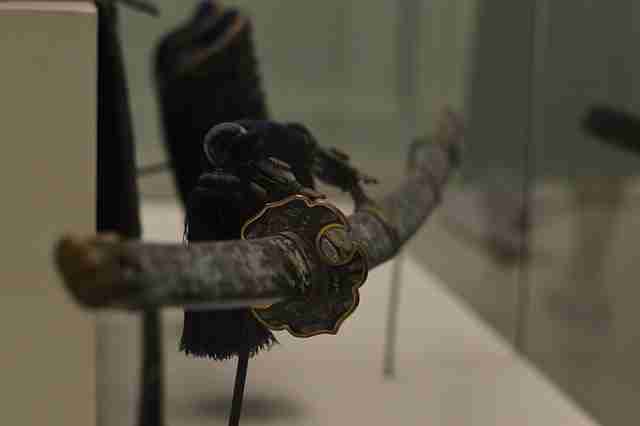
The katana is one of the most iconic symbols of Japanese culture. Historically this type of sword was distinguished by its long-curved blade with swift cutting capabilities – usually measuring between 60 to 80 centimeters long when full-sized; variations exist which range from shorter versions (wakizashi, tantos or modern adaptations of this type) through time; this article explores this topic further by looking at current production as well as historical usage.
Understanding Sword Length and Classification
Before diving into the specifics of finding the shortest katana, it’s essential to gain an understanding of how Japanese sword culture classifies sword lengths. A traditional katana features a single-edged, curved blade measuring from 60-80 cm long; however, Japanese swords differ greatly in terms of size depending on their intended use – for instance wakizashi is typically shorter, between 30 and 60 cm, serving as companion sword to accompanying katana worn as daisho pairs; while tanto was utilized primarily for stabbing or utility blade purposes.
Shortest Katana in Production
The tanto sword is typically considered to be the shortest katana currently in production today, although wakizashi swords still manufactured by various manufacturers can also be considered short swords. Although tanto is usually considered the smallest member of traditional katana family. Modern tanto blades typically range in length from 15-30 cm, though certain manufacturers can produce even shorter versions upon request.
These knives don’t simply resemble miniature versions of katana swords – each boasts unique design elements and utility applications. Tanto blades feature an incredibly steep curvature, making them highly efficient at thrusting and stabbing as opposed to their usual katana-slicing action. Although smaller in size than their katana counterparts, tantos still boast exceptional craftsmanship that collectors seek out.
Modern production of the shortest katana has emerged within both martial arts and ornamental sword collections. Many swordsmiths now produce smaller versions known as mini katanas that may serve either decoratively or functionally for training.
These miniature versions replicate full-sized katana’s craftsmanship but come in more portable formats that still impress. Hence, they make excellent gifts for those who appreciate artistry but do not need full size functionality of traditional swords.
Origin and History of Shorter Katanas
The history and origins of shorter katana variants–particularly the wakizashi and tanto–can be found in feudal Japan, particularly its tradition. The wakizashi, typically measuring 30-60 cm in length, was an essential piece of the samurai’s arsenal during Edo period (1603-1868).
They were required by law to wear both swords: one for battle, as well as another sidearm (usually between 30-60 cm in length) to self-defense or ceremonial purposes or seppuku; this allowed restoring of honor after an act that caused dishonor to arises.
The tanto dates back even further to Kamakura period (1185-1333) where it first appeared as a dagger or knife used primarily for stabbing close quarters. Although smaller in size than its katana counterpart, its smaller length and maneuverability made it ideal for use in tight spaces where larger katana might have proven less effective.
Time passed and production of shorter katanas widened beyond military use. In Edo period Japan, for instance, the wakizashi came to symbolize cultural significance as it was often used during social rituals such as tea ceremonies or as a symbol of status of samurais.
Tanto also became highly prized collector’s items with intricate fittings, carving and scabbard decorations; over time these shorter swords transcended their initial purpose by becoming symbols of refined taste and craftsmanship.
Uses and Significance
While the katana was the primary weapon associated with samurai culture, shorter swords such as the wakizashi and tanto played their own distinct roles within that culture. Not only was the wakizashi used as a weapon but it was part of their daisho outfit–paired swords worn on either arm that symbolized honor and social status of their wearer.
The tanto, while shorter and less powerful than its counterparts, was widely revered for its precision. An essential weapon during times of need as well as used ceremonially. Nowadays both tantos and wakizashis are valued collector’s items, seen as symbols of artistry and craftsmanship similar to their katana counterparts.
Modern martial artists have taken to using shorter katanas more and more often in schools that emphasize close-quarters combat, as they’re easier to handle and maneuver in controlled environments. Some martial arts use them for practice weapons as their smaller size makes them easier for controlled environments.
Modern Production of Short Katana
Modern swordsmiths continue to produce shorter katanas that combine traditional craftsmanship with contemporary materials. While traditional katana-making involves hand-forging steel using centuries-old methods, modern swordmakers use other methods such as casting, laser-cutting and CNC machines to produce more affordable and accessible versions – such as modern tanto blades made from stainless steel or other alloys which makes them more resilient and easier to maintain than their traditional counterparts.
Shorter katanas may be designed more for ornamental than practical purposes, making them popular display pieces or collectibles of Japanese sword history in a more manageable size. While not typically intended for combat use, these blades still maintain the intricate artistry that makes the katana so highly revered.
Why Some Collectors Choose Shorter Katanas
Although full-sized katanas remain the hallmark of Japanese sword culture, collectors increasingly appreciate smaller versions as an artifact for display or as collections of their own. Their compactness embodies all the skill and artistry of traditional Japanese sword-making while remaining more manageable for display purposes
Many collectors favor tanto or wakizashi blades due to being less cumbersome to display; these allows multiple pieces of history in smaller, manageable form. These blades often feature elaborate craftsmanship such as finely wrought tsubas (handguards) or beautifully decorated scabbards which appeal to art history enthusiasts alike.
Shorter katanas are highly valued in martial arts circles, where practitioners appreciate both their unique functions and level of skill required to use them effectively. While full-sized blades may be better for certain forms of combat, shorter ones often provide more practicality for training exercises in smaller spaces or during practice exercises.
Conclusion
Today, the tanto is the shortest katana available for purchase; typically measuring 15-30 cm in length. It has its roots in Japan’s feudal period where shorter blades served both practical and symbolic functions for its warrior class samurai warriors.
Over time, blades have transformed from utilitarian tools into prized collectables valued for their craftsmanship and historical importance. Modern production techniques have made shorter blades more accessible for both practical martial arts training and decorative purposes, as well as collectors. No matter their size or purpose, Japanese swordsmanship continues to hold an integral place within both martial and cultural environments.